
Projects
My projects focus on end-to-end autonomous system development, spanning mechanical fabrication, perception, control, learning, and real-world deployment.
The emphasis is on building complete robotic systems, validating them in simulation, and deploying them under real hardware and power constraints.
🤖 Eye-in-Hand Image-Based Visual Servoing (SO-101 Robot Arm)
MuJoCo · OpenCV · Python · Embedded Servo Control
This project implements a robust eye-in-hand Image-Based Visual Servoing (IBVS) pipeline for a 5-DoF SO-101 robotic arm, integrating mechanical fabrication, actuator control, perception, and closed-loop visual control.
Physical Fabrication & Hardware Integration
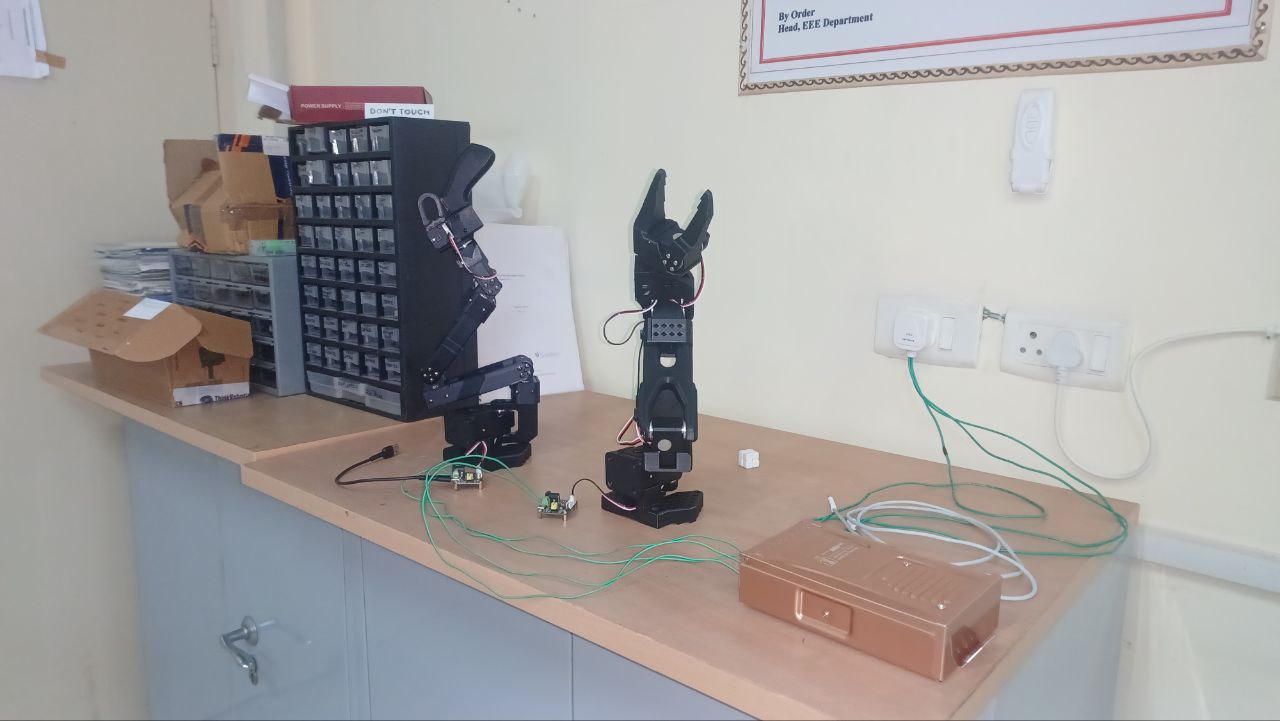 Custom-fabricated SO-101 robotic arms assembled and validated in the NanoR Group Lab, Dept. of EEE, ABV-IIITM Gwalior.
- 3D printed structural components in-house at the NanoR Group Lab
- Independently assembled dual-arm configuration
- Integrated Waveshare ST3215 serial bus servos for all joints
- Configured half-duplex UART-based daisy-chain communication
- Designed dual-arm power architecture using a 12V SMPS
- Managed stable current distribution for simultaneous actuation
- Performed mechanical alignment and joint calibration
- Validated perception-to-actuation response prior to IBVS deployment
This stage ensured mechanical reliability and actuator stability before deploying vision-based control.
System Simulation & Camera Modeling
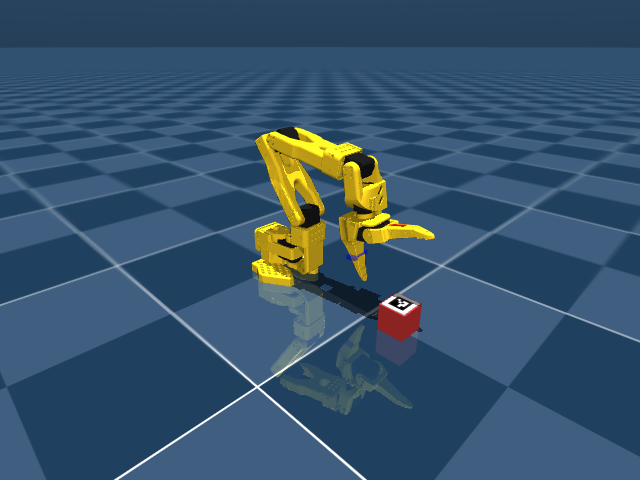 SO-101 robot arm simulated in MuJoCo for perception-driven manipulation.
- Modeled full robot–camera system in MuJoCo
- Mounted calibrated eye-in-hand camera with offset compensation
- Implemented forward/inverse kinematics validation
- Used ArUco marker detection for feature extraction
- Applied lever-arm compensation for camera displacement correction
Simulation enabled safe validation of the control pipeline prior to hardware testing.
IBVS Approach Phase (Large Initial Error)
 Initial IBVS phase with large feature error (~482 px).
- Visualized raw image-space feature geometry
- Estimated depth using marker size–based approximation
- Scaled interaction matrix using real-time depth estimates
- Transitioned from high-error approach to stable convergence
This phase tested robustness under severe pose misalignment.
Eye-in-Hand Visual Servoing (Convergence)
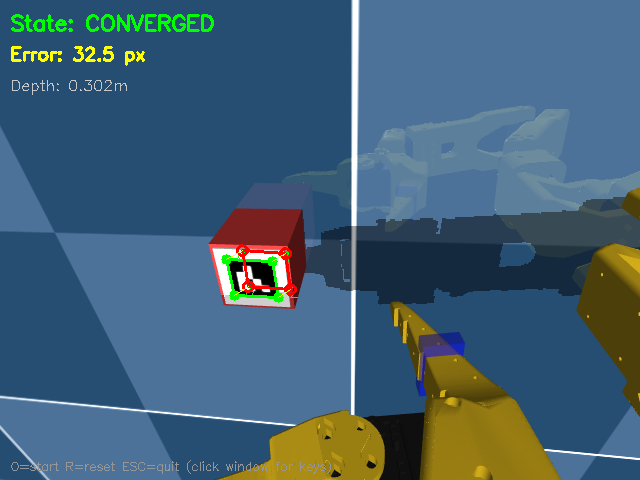 Feature alignment during closed-loop convergence.
- Implemented Chaumette’s pixel-based control law
- Designed a damped pseudo-inverse controller to avoid singularities
- Used radial multi-depth search for robustness
- Enforced minimum gripper height safety constraint
- Implemented automatic restart on tracking failure
The controller maintained stability across both translational and rotational components.
Control Behavior & Stability
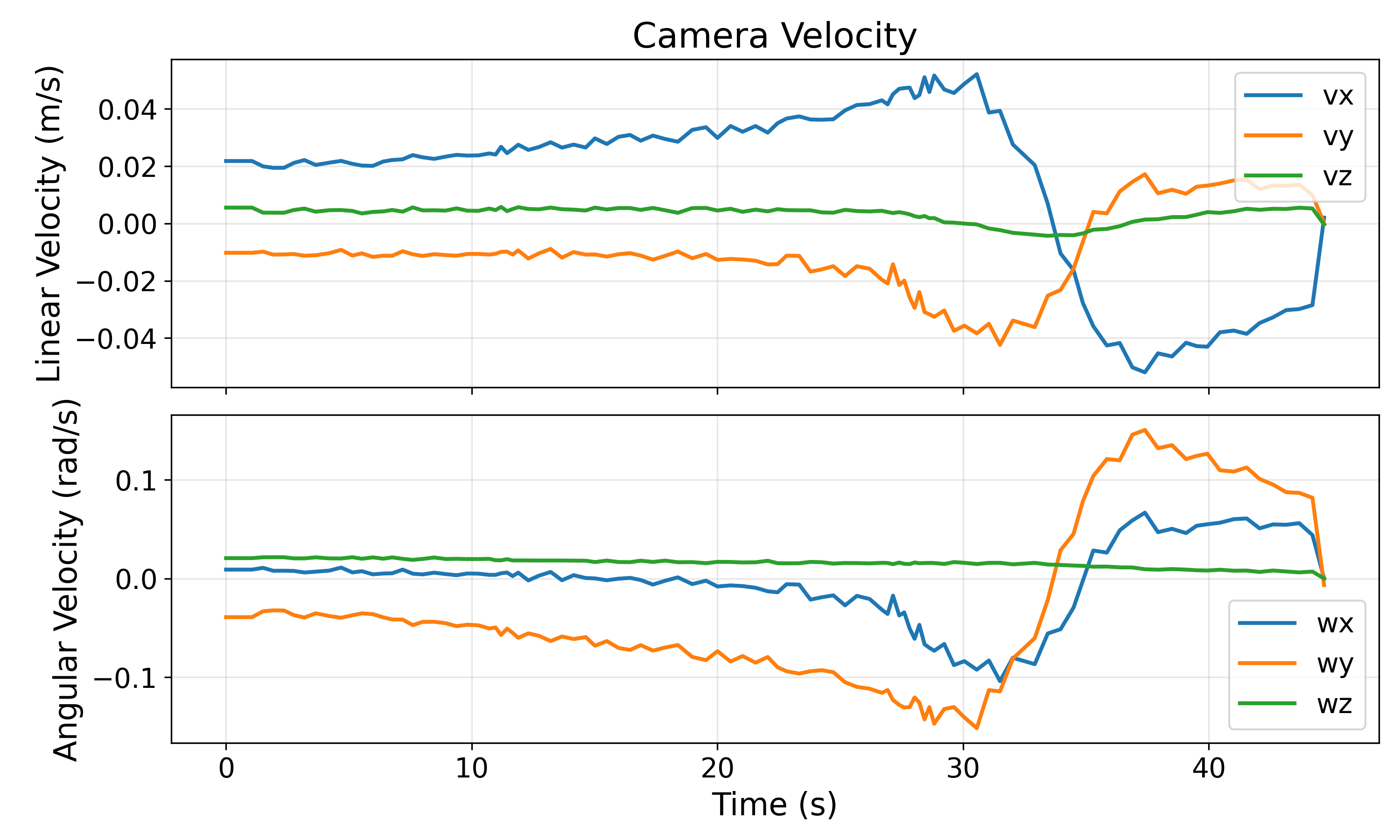 Linear and angular velocity components during convergence.
- Observed smooth velocity decay profiles
- Avoided oscillatory behavior during rotational alignment
- Maintained consistent convergence rate across test conditions
End-Effector Trajectory Validation
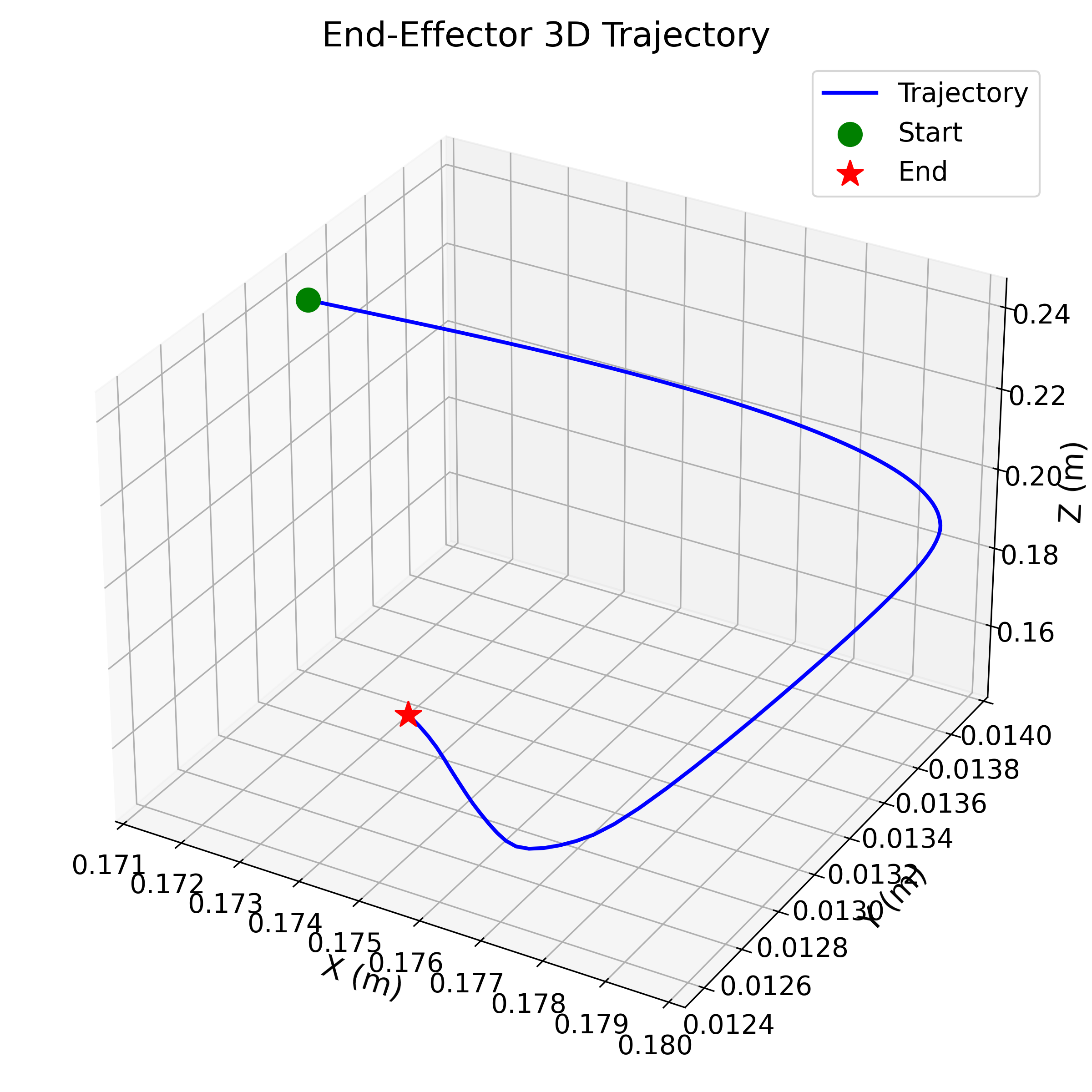 3D trajectory from initial pose to final alignment.
- Demonstrated smooth monotonic convergence
- Achieved final alignment within 30–40 px feature error
- Validated repeatability across multiple initial conditions
Outcome
A simulation-validated and hardware-deployed eye-in-hand IBVS pipeline, demonstrating tight integration of:
- Mechanical fabrication
- Actuator-level control
- Perception-driven feedback
- Safety-constrained closed-loop control
- Real-world robotic execution
🔗 GitHub: https://github.com/lomash-relia/vision_mujoco
🚀 AI-Powered Planetary Rover (Pragyan-Inspired)
PyTorch · OpenCV · Raspberry Pi · Edge AI Deployment
This project involved designing and deploying a low-cost autonomous planetary rover prototype, emphasizing edge AI inference, perception-driven navigation, and simulation-to-real transfer.
Simulation & Perception Validation
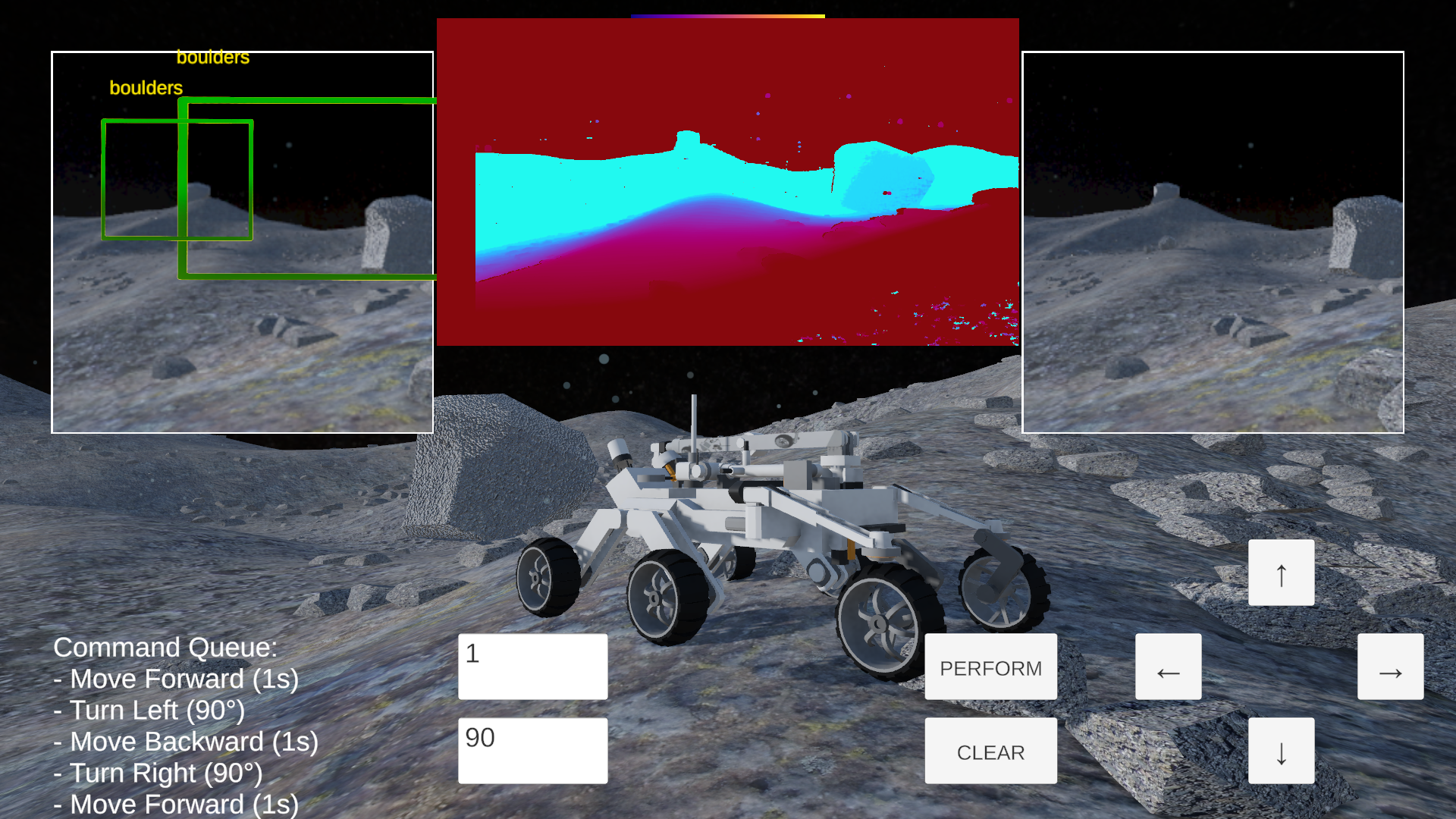 Simulated lunar terrain used for navigation validation.
- Developed obstacle detection and terrain perception pipelines
- Compared stereo-based simulation with monocular deployment
- Analyzed perception failures and depth uncertainty
Onboard Edge AI (Raspberry Pi 4B)
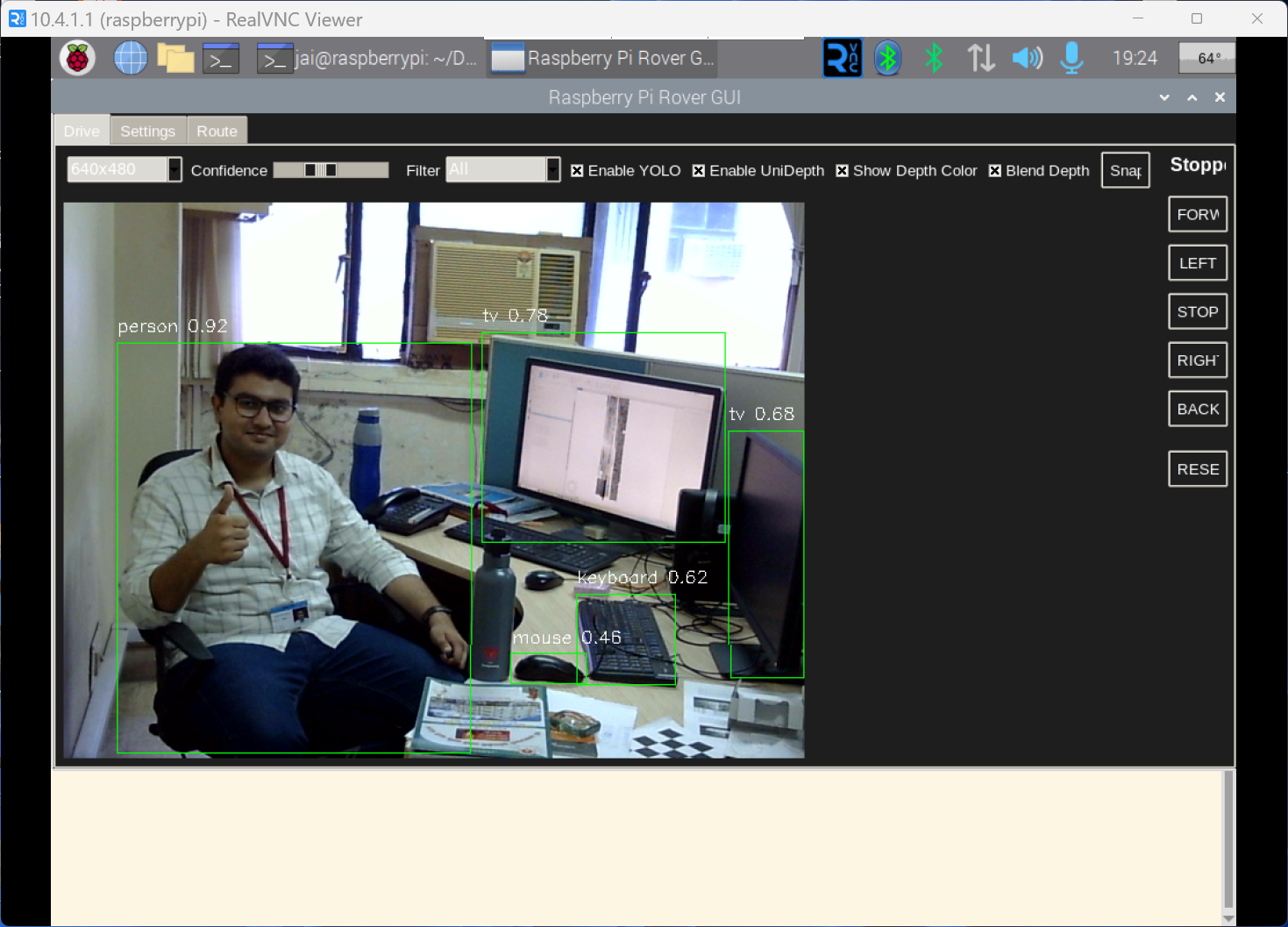 Real-time detection and monocular depth estimation running on edge hardware.
- Integrated YOLO-based object detection
- Deployed monocular depth estimation under constrained compute
- Optimized models for near real-time inference
- Maintained system temperature below 65°C
- Supported autonomous and manual control via remote GUI (VNC)
Demonstrated practical trade-offs between inference latency and depth accuracy.
Physical Rover Prototype
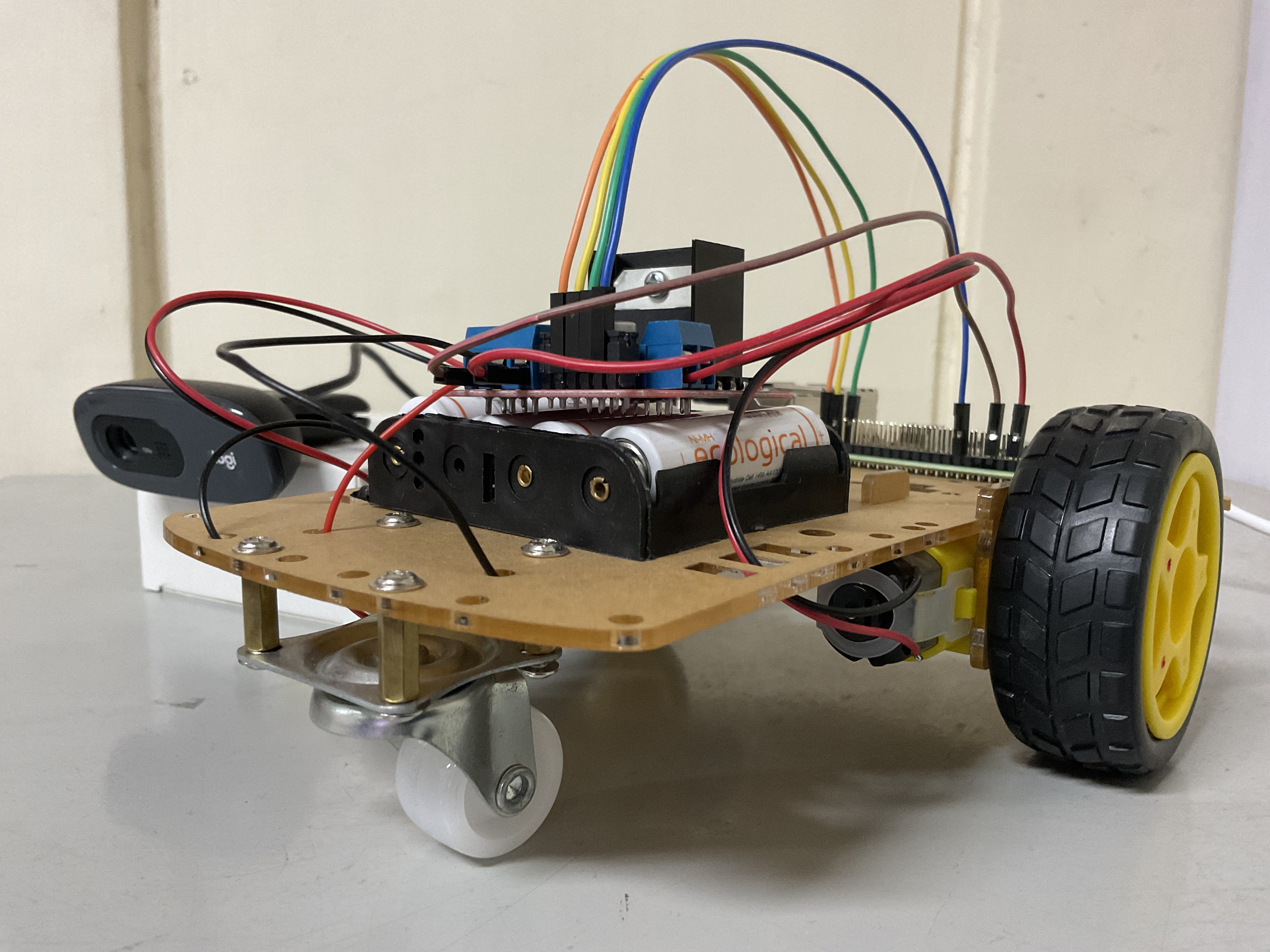 Low-cost rover prototype with onboard compute and actuation.
- Designed modular chassis and drivetrain
- Integrated motor drivers and power management
- Enabled end-to-end perception-to-actuation testing
Outcome
A full simulation-to-real autonomous rover pipeline, highlighting:
- System-level optimization under hardware constraints
- Edge AI feasibility for planetary-style navigation
- Trade-offs between perception accuracy and real-time performance
🌪 Deep Learning for Tropical Cyclone Intensity Estimation
PyTorch · TensorFlow
- Designed a 4-channel satellite imagery pipeline
- Implemented image-to-intensity regression models
- Replicated rotation-blended CNN architectures
- Benchmarked performance against published results
- Published in the WGNE Blue Book
This project emphasized reproducibility and scientific benchmarking in applied computer vision research.
🧠 LLM-Based Knowledge Extraction System
FastAPI · LangChain · Retrieval-Augmented Generation
- Built a pipeline for transforming unstructured text into structured knowledge graphs
- Implemented Retrieval-Augmented Generation (RAG)
- Developed REST APIs for system interaction
- Improved factual grounding and response reliability
Notes
- Code repositories and additional technical details are linked where applicable.
- Extended experimental results and demos are available upon request.
- Ongoing robotics and autonomous system work continues under my M.Tech thesis.